Secure API Keys in Your App
Prevent Costly Abuse
Don't manage your own infra just to protect client API keys.
Let us handle the backend for you.
Just one line of client code:
KVProxyInitialize()
Let KVProxy route your key-less requests through our server, and inject API keys where attackers can't intercept them.
No credit card required • Works with any third party API
Per-client Rate Limits
Mitigate threads in real-time with precise per-user rate limits.
Instant Key Revocation
Stop thieves cold. Rotate compromised API keys on-demand.
Quick & Easy Integration
One line of client code. Works with any third-party APIs.
No joke: it's literally one line of code to integrate KVProxy.
If You Put API Keys in Your App, They Will Be Stolen
- Abuse is invisible until the bill arrives.
- Rotating keys forces app updates and user frustration.
- One leaked key can drain your entire vendor quota.
KVProxy contains the blast radius, and integrates instantly.
Why Teams Choose KVProxy Instead of Building Their Own
KVProxy is for teams who want to focus on their app, not a new infrastructure project.
Works with Any Third-Party API
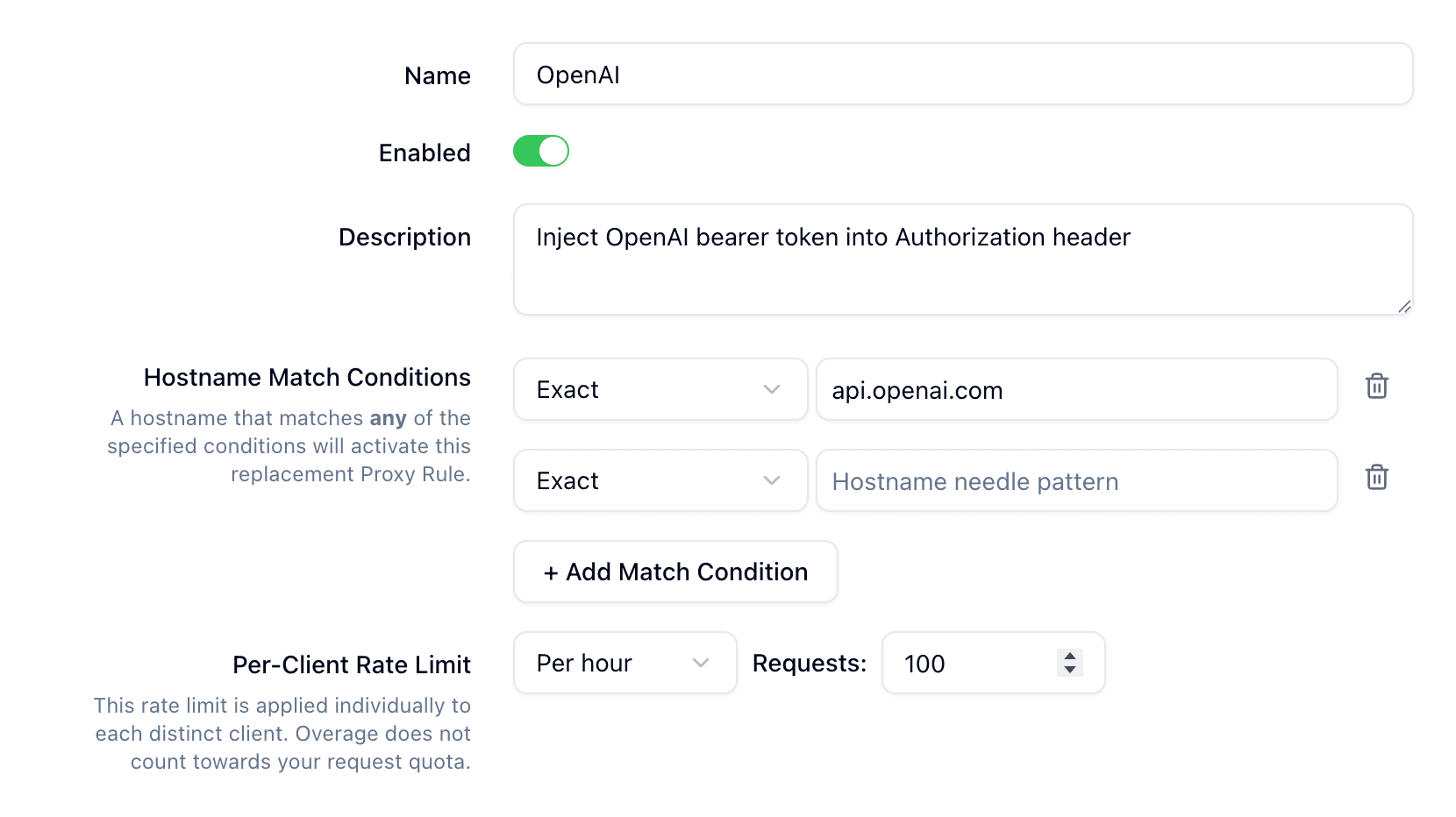
Custom service-matching and rate-limiting rules work with any domain:
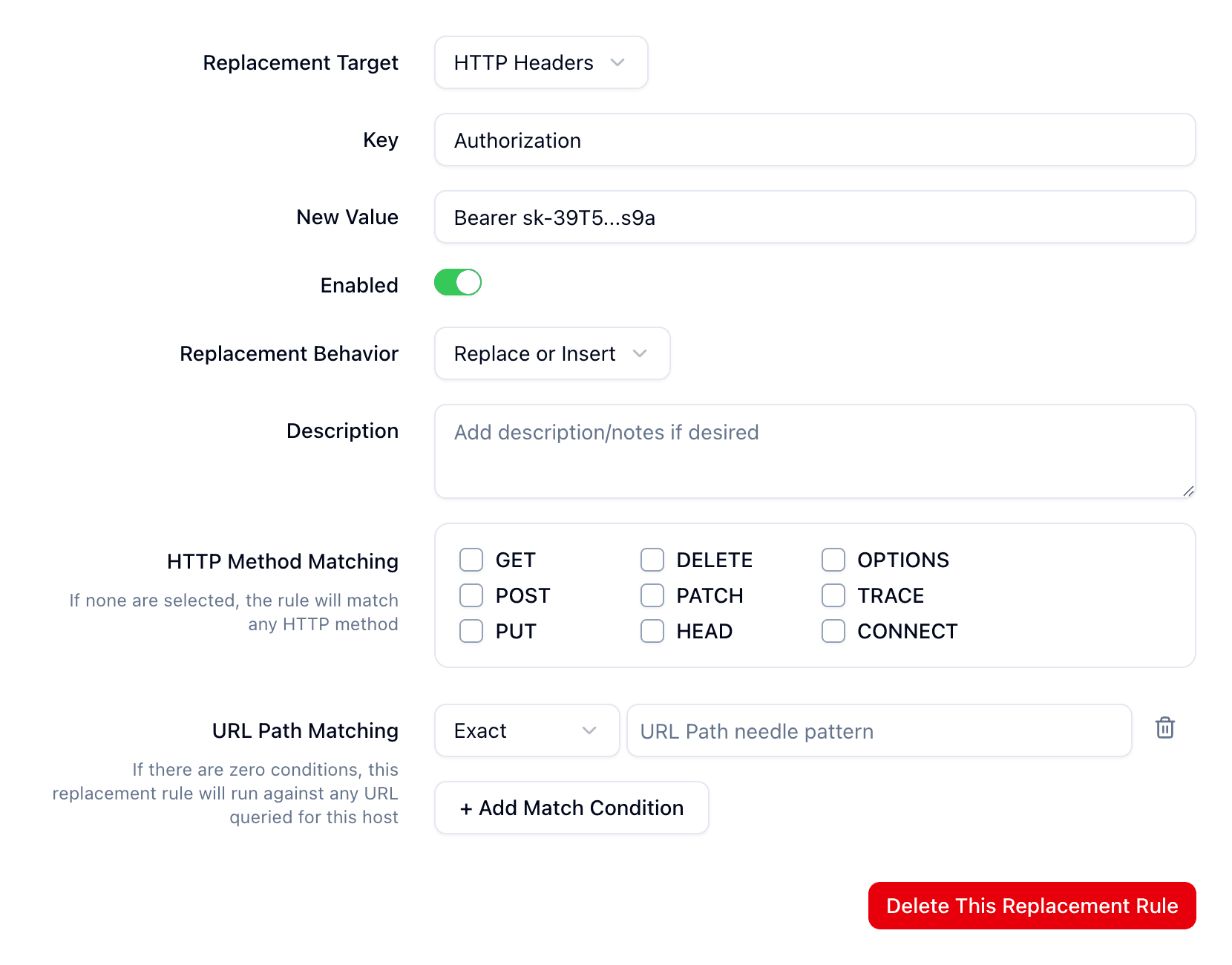
Key replacement rules can target headers, query parameters, or JSON body values on a per-path and per-method basis:
Designed for Hostile Client Environments
Frequently Asked Questions
How is KVProxy different from competitors?
KVProxy is the only drop-in proxy solution that works with any third-party API, and integrates immediately with a single line of code.
How does KVProxy handle API keys?
KVProxy never persists plaintext API keys. Keys are encrypted at rest and only decrypted in memory when needed.
What if I need to rotate API keys?
When you rotate a key in our dashboard, our backend will immediately begin using the new key for all requests. No need to wait for a client update.
What if someone uses my project ID?
Part of project configuration involves uploading your DeviceCheck certificate. This certificate is used to verify that requests are coming from your legitimate app. If someone uses your project ID, they will not be able to make requests because they will not be able to pass the DeviceCheck verification.
What if someone attempts a MITM attack?
We use certificate pinning in the client to verify that the requests are encrypted all the way to our backend. Even if an attacker injected a custom root certificate, the client will refuse to connect if it sees an unrecognized certificate.
How are requests counted?
Requests are counted based on the number of requests made to the KVProxy endpoint. Each request is counted as one request, regardless of the size of the request. Our client SDK will only forward requests that match the proxy rules.
How do you handle scaling?
Every decision we make is focused on scalability. We use a distributed system with nodes that handle requests in parallel. Project configuration is inherently lightweight and locally-cacheable, allowing us to scale horizontally with minimal incremental overhead.
Start Free, Prevent API Key Abuse Within Minutes
No credit card required • Works with any third party API